The Best Fluffy Pancakes recipe you will fall in love with. Full of tips and tricks to help you make the best pancakes.
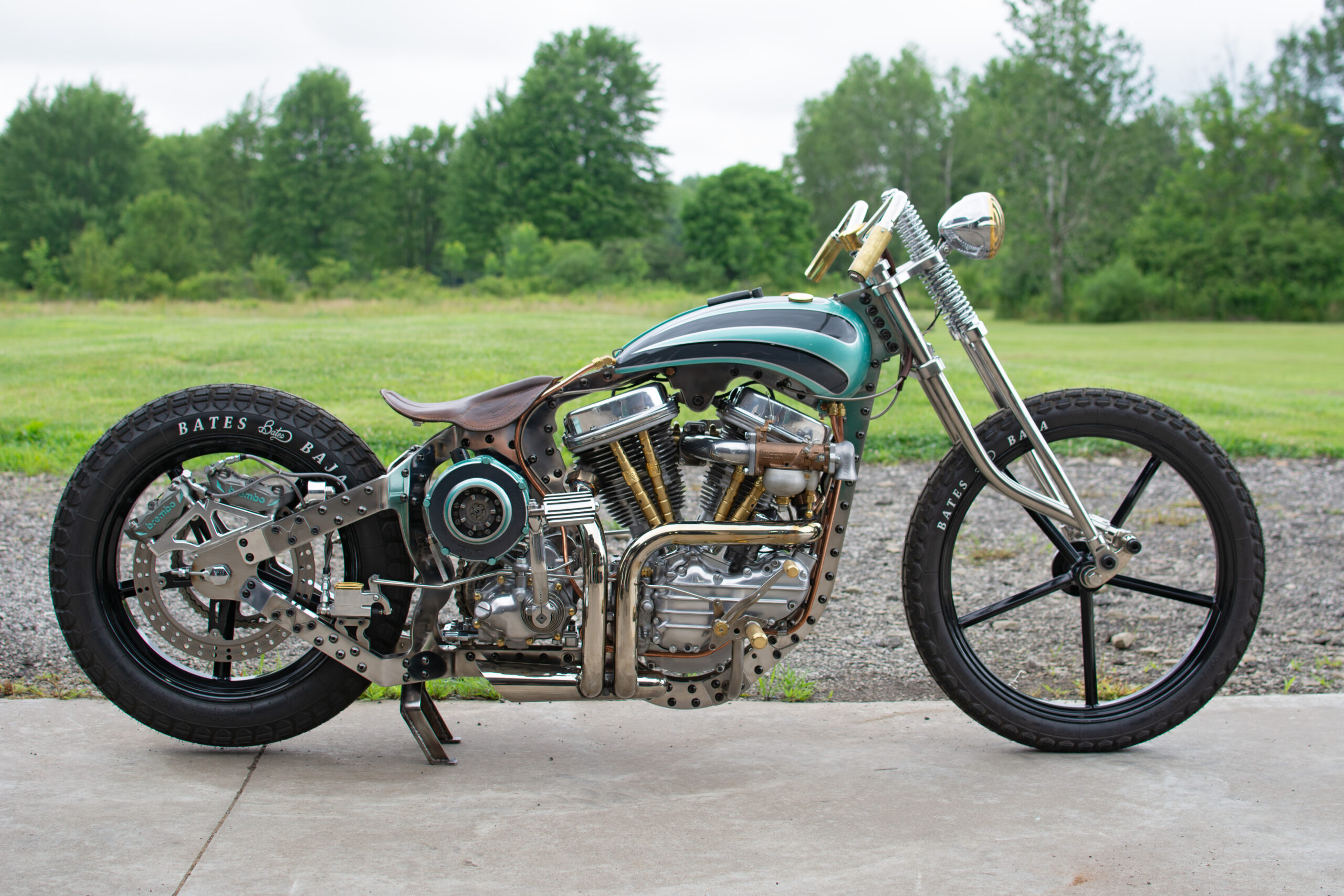
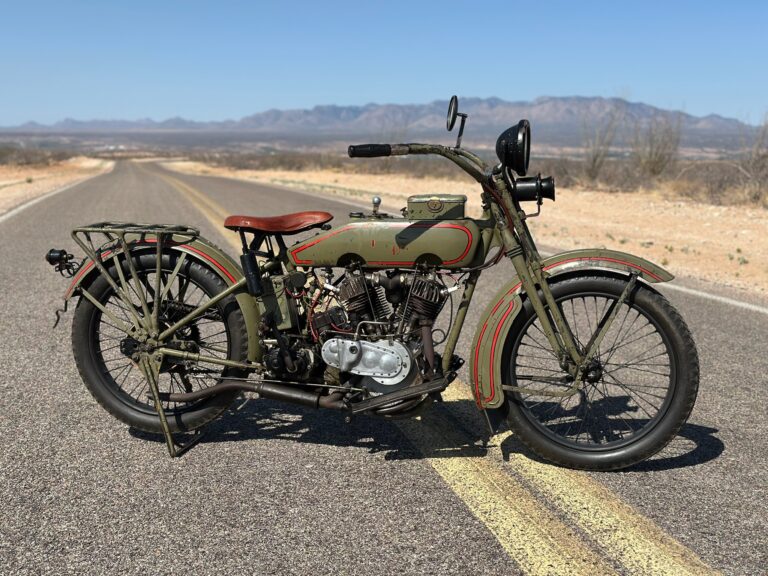
Every once in a while, a single part changes the direction of an entire build. This bike was one of those times.
From the very beginning, this motorcycle was designed around one component: a World War II era aviation inertia starter. Not adapted later. Not squeezed in as an afterthought. Everything you see exists because of that starter.
What Is an Inertia Starter, Anyway?
The starter itself was originally built in the 1940s by Eclipse Aviation, a division of Bendix. These were used on airplanes and heavy equipment back when things were unapologetically mechanical.
If you’ve ever heard one spin up, you get it instantly. The sound alone tells you this thing means business. Kinda like the Millenium Falcon in Star Wars.
I’ve been fascinated with inertia starters for years. You’ll find versions of them on early trucks, Model A’s, even tanks. Different sizes, different brands, different applications, but the same core idea. Build momentum first, then release it all at once.
That mechanical honesty fit exactly what we were trying to do with this bike.
The Idea That Wouldn’t Go Away
I found this particular starter on eBay. I’d had the idea of using one on a motorcycle bouncing around in my head for a couple of years, but it never quite fit a build until now. Once it did, everything clicked.
The challenge was obvious right away. This thing was designed for airplanes, not motorcycles. It didn’t spin the correct direction, it was larger than ideal, and it sure wasn’t meant to start a 1948 Panhead.
So naturally, we decided to make it work.
Making an Airplane Part Belong on a Motorcycle
The first rule was that it had to look right. Not “custom because it’s weird,” but “custom because it looks like it could have been factory-built in another universe.”
That meant the starter needed to fit the frame cleanly and sit where it made visual sense. Once the frame was built and we mocked everything up, it landed right where an oil tank would normally live on a factory-style bike. That was a big win.
Weight was another issue. This starter originally had an electric assist motor built into it. Planes used the electric motor to spin the inertia system, with the hand crank acting as a backup.
We didn’t need that.
So I cut the electric portion off, milled the housing, cleaned everything up, and made it look like it belonged there from day one. That dropped a lot of unnecessary weight and brought the starter down to roughly 26–27 pounds.
Heavy, yes. But purpose built heavy.
The Math Nobody Sees on YouTube
Here’s where things get serious.
This inertia starter has a gear ratio of roughly 128:1. That means the outer flywheel, the loud, angry part everyone hears, spins 128 times for every single rotation at the output.
That flywheel stores energy. When you pull the engagement lever, all of that stored momentum transfers through the gear train to crank the engine.
The faster you spin it, the more torque you get. Sounds great, right?
Except more torque also means more chances to break something.
So the entire gear system had to be overbuilt while still fitting inside a very tight space. Every gear, shaft, and bearing had to handle 200–300 foot-pounds of torque without flexing, shifting, or failing.
No pressure.
Spinning the Right Way (Eventually)
Another problem: the starter spins the wrong direction.
To fix that, we had to design an entire gear set to reverse the rotation while also dialing in the correct output RPM. Kevin (O’Neal) handled the CAD work (he was a major help on this and every project), and together we worked out the math to match the RPM you’d get from kicking the bike.
Originally, the plan was to run a magneto. That didn’t work out due to space constraints, so we went with a 12-volt generator system instead. Once we knew what RPM the engine actually wanted to fire at, we geared the inertia starter to hit that number, about 96 RPM at the output.
That ended up being the sweet spot.
How It Actually Starts the Bike
Here’s the process:
You flip the seat up.
Unfold the crank handle between the gas tank.
Spin the starter until it hits the right sound and feel.
Pull the engagement lever.
Inside the starter is a one way engagement spool. We machined a mirrored cog that interfaces with it perfectly. When engaged, the stored momentum transfers through the gears, spins the clutch basket, and cranks the motor.
Once the engine fires, it immediately outruns the starter. The one-way mechanism disengages automatically, the cog retracts, and the starter spins down on its own.
Sometimes it keeps spinning for a bit after the bike is already running, which is honestly one of my favorite parts. You can see and hear the energy winding down.
“Is That Thing Safe?”
This comes up a lot.
Yes, it’s rideable. Yes, it’s safe. Yes, I ride it.
There’s a leg guard in place, and with a foot clutch your leg naturally sits above the assembly anyway. Open chains have been part of custom motorcycle culture forever. This is no different, just more visible.
There are no chain tensioners, because Panheads didn’t use them for most of their era. Chain adjustment is done at the transmission, just like it’s always been done.
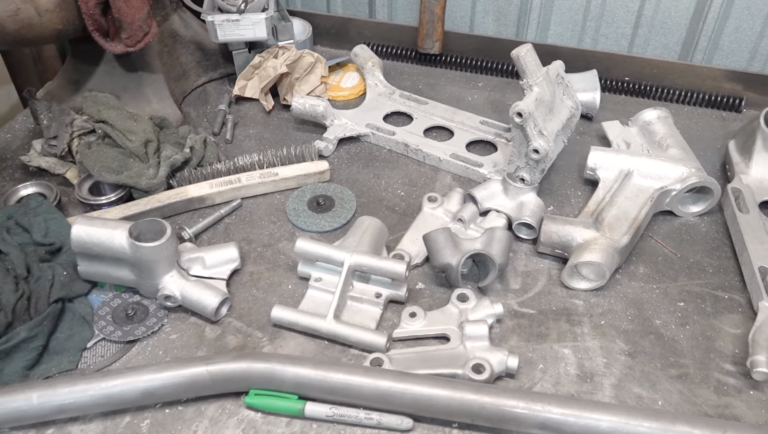
For the starter drive chain, we slotted the pillow block bearings so the entire gear set can be adjusted cleanly without adding external tensioners or visual clutter.
Everything rides on bearings. All gears are hardened. All mounts are solid. After the first test start sheared a keyway, lesson learned, we TIG welded everything that needed to be permanent.
Nothing is loose. Nothing is waiting to fail.
Why Do It This Way?
Because nothing like this exists.
That’s the whole point.
This bike wasn’t built to be easy, quiet, or familiar. It was built to be mechanical, intentional, and honest. The inertia starter isn’t a gimmick. It’s the heart of the entire build, and everything else had to rise to its level.
If you’ve got questions, I’m always happy to talk about it.
Thanks for appreciating the weird stuff that still works!